
Traditional Ashtimki folk art fading in Tharu community amid modern influences
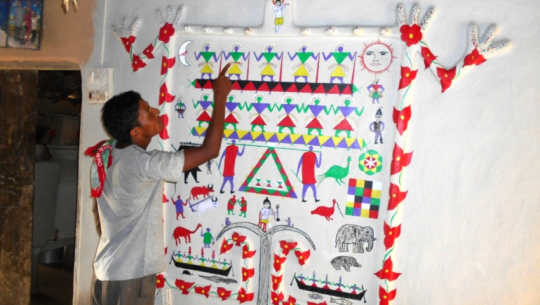
Kanchanpur: The traditional folk art of the Shri Krishna Janmashtami (Ashtimki) festival, once an integral cultural practice of the Tharu community in Kailali and Kanchanpur, is gradually disappearing. The influence of external culture and changing practices have led to the decline of this centuries-old tradition rooted in folk painting.
Local resident Kaluram Chaudhary recalled that during Ashtimki, Tharu families used to create vibrant paintings depicting Lord Krishna and elements of daily life in their living rooms using naturally prepared paints. “Earlier, there was great enthusiasm to create attractive paintings. While some prepared traditional paints at home, others bought colors from the market, and fasting women actively participated in the process,” he said.
In some villages, paintings were made in the house of the village headman, where the community gathered for collective worship, while in others, households made their own paintings. However, this tradition is now being replaced by modern posters. “There are no elders left who know the traditional style, and the youth are not interested in learning. So, people have started worshiping with printed posters,” said Guruwa Himali Chaudhary of Shuklaphanta Municipality-10.
Tharu social activist Habaldar Chaudhary explained that these folk paintings traditionally depicted human life from birth to death, along with symbols such as the sun, moon, animals, aquatic life, and mythological elements. Fasting women would prepare these paintings after Brahma Muhurta, using motifs like Lord Krishna, snakes, turtles, peacocks, and elephants. He noted that today, such practices survive only in a handful of Tharu villages.
Earlier, women were primarily responsible for making these paintings, though men later joined in. Now, with declining generational transmission of the skill, the art form has nearly vanished. Social worker Revan Chaudhary emphasized that traditional methods involved pounding rice husks and mixing natural pigments from beans, khayar, pakoda seeds, and leaves. “Each color held symbolic meaning—black for emptiness, red for vitality, green for patience, yellow for wisdom, and blue for tradition,” he said.
After completing the Ashtimki paintings, fasting women dressed in traditional attire and performed worship with rice, fruits, lamps, lemon branches, and other offerings. Families gathered to receive the prepared food as prasad. The festival continued overnight with singing and dancing in the traditional Tharu language. On the following morning, devotees immersed lamps in rivers or lakes, bathed, and fasting women concluded their fast by eating after offering food to the deity.
Cultural experts stress that the Ashtimki folk art, believed to have originated in the Tharu community over 5,000 years ago, carries immense cultural and symbolic value. However, its survival now depends on intergenerational transmission and renewed efforts to preserve the practice as a vital part of Tharu identity.

Dineshkhabar Desk