Chhath festival concludes with offering of Aghraya to the rising sun
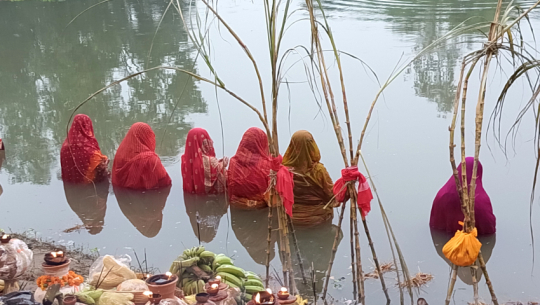
Dhangadhi: The Chhath festival, celebrated with devotion to the Sun God, concluded this morning with the offering of Aghraya to the rising sun.
According to tradition, the festival ends with devotees sitting by riverbanks and offering Aghraya—comprising cow’s milk, flowers, and water—to the rising sun. The worship performed at the river in the morning is known as Bhinsarghat, named after the early morning rituals conducted at the ghats. After offering Aghraya and having darshan of the Sun at sunrise, the Chhath Puja formally concludes. During the ritual, devotees stand in waist-deep water to make their offerings.
As life on earth is sustained by both water and the sun, it is believed that rivers are revered as mothers while the Sun is worshipped as the source of all power. Religious scholar Prof. Toyaraj Nepal explained that scriptures mention worshipping the Sun during the bright fortnight of Kartik fulfills one’s wishes and grants desired results. He noted that the sixth day of Kartik Shukla, also known as Surya Shashthi, is prescribed in the scriptures as the day for Sun worship.
On this occasion, married men and women pray for the longevity of their spouses, while unmarried women and men pray for suitable life partners. Many devotees also celebrate this festival with the wish to have children, believing that observing the Chhath fast brings the fulfillment of their desires.
The festival, dedicated to the worship and reverence of the Sun God, is celebrated from the fourth to the seventh day of Kartik Shukla. It began on Saturday this year. On the fourth day, devotees take a ritual bath and consume only clean food. From this day onward, they abstain from eating fish, meat, garlic, millet, lentils, and similar foods until the conclusion of Chhath. The festival ends after offering Aghraya and performing worship to the rising sun on Kartik Shukla Saptami, which took place this morning. Women in particular observe a strict fast during Chhath in the belief that their wishes will be fulfilled.
It is believed that the festival originated from the worship of the Sun God by Chhathimata. During the Mahabharata period, the Pandavas and Draupadi worshipped the Sun God to ensure their success during exile. It is said that the Sun worship performed by the Pandavas while living in King Virat’s court in Mithila helped make their exile successful. The Surya Purana also records that Anusuya, the wife of Atri Muni, was the first to observe the Chhath fast and was blessed with unwavering good fortune and her husband’s love. The tradition of celebrating Chhath is believed to have begun from that time.

Dineshkhabar Desk