First gynecologist begins service at Darchula district hospital
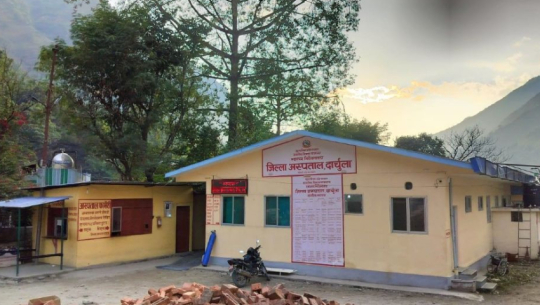
Darchula: For the first time since its establishment, Darchula District Hospital has begun offering gynecologist services with the arrival of Dr. Smriti Shahi. The hospital, founded in 2042 BS, had never previously had a specialist in gynecology, leaving women, particularly pregnant patients, with limited access to treatment, said District Hospital Information Officer Dambar Dutta Bhatta.
Dr. Shahi joined the hospital on Ashoja 9, marking a milestone for health services in the remote district. “Until now, women had to hide their health issues due to the lack of specialized care,” Bhatta said. “Now, women can easily receive treatment, and it is important to inform the public, including those traveling to India, that all gynecological services are available locally.”
Chief of the hospital, Dr. Rabindra Bhattarai, noted that bringing a gynecologist to the district required persistent effort. “Since becoming chief, we have worked tirelessly to bring a gynecologist here,” he said. “Managing human resources effectively is essential to serve the citizens in remote areas. I am committed to providing comprehensive health services, even though working here is more challenging than in urban centers like Kathmandu.”
The hospital has prepared a separate OPD and surgery room to provide treatment for common women’s health issues such as uterine prolapse, oral cancer, and fibroids. Dr. Bhattarai emphasized that women will no longer have to travel outside the district or conceal their conditions.
Dr. Shahi, who has previously worked in Dadeldhura, Jorpati, and Myagdi, expressed pride in serving in a remote district. “I aim to provide as much health service as possible to the women here,” she said.
Currently, the hospital has ten doctors, including three specialists, five medical officers, an orthopedic surgeon, and a dentist. Despite the limitations of the old hospital building due to delays in constructing a new facility, staff are working to deliver efficient and effective services. Three ultrasound machines are also operational, and patient numbers continue to rise.
According to Information Officer Bhatta, 151 patients received treatment between Kartik 3 and 7, and the number did not decrease even during the Tihar holidays. The presence of specialist doctors has also begun attracting patients from India. “If the public is made aware of the availability of female specialists and MDGP doctors, more patients from rural areas are likely to seek care locally instead of traveling to Haldwani, Pithoragarh, or Dharchula in India,” he said.

Dineshkhabar Desk