
Cold wave and dense fog disrupt daily life in Kanchanpur
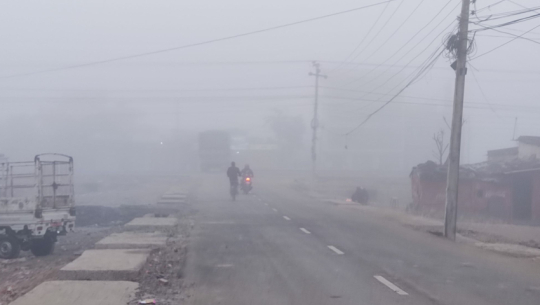
Kanchanpur: Public life in Kanchanpur and other parts of the western Terai has been severely affected over the past few days due to dense fog and an ongoing cold wave.
In response to the extreme cold, local governments in the district have closed schools and urged residents to take safety precautions. Citing health risks to children, local levels have begun granting holidays to both community and institutional schools. So far, Krishnapur and Shuklaphanta municipalities have announced school holidays after students faced difficulties attending classes.
Ishwori Bhatta, a teacher at Shree Krishna Secondary School in Jhalari, said that schools have been forced to light fires in classrooms to continue lessons. He noted that cases of cold and cough among young children have increased due to the harsh weather. Bhatta added that the three-day holiday granted by the municipality would provide some relief.
With public life disrupted by fog and cold, local representatives have also increased safety alerts. Baburam Chaudhary, Ward Chair of Krishnapur Municipality–6, has requested residents to take special precautions, noting that the cold is particularly severe during the morning and evening hours.
Similarly, Nirmal Rana, Chair of Laljhadi Rural Municipality, called for special attention to health, stating that children, pregnant women, people with chronic illnesses, and senior citizens are more vulnerable to the cold. He also urged community forests within the rural municipality to supply firewood to public squares and settlements.
“The cold and cold wave have made daily activities difficult and increased health risks,” said Chair Rana. “In such challenging times, we must stay safe and help keep others safe.”
Daily life in Kanchanpur has slowed significantly due to the cold wave. Market activities have declined, and vehicles are being forced to use headlights even during the daytime because of thick fog.
Doctors have advised the public to drink lukewarm water, wear warm clothing, and remain indoors as much as possible to avoid cold-related illnesses. Local governments are also conducting awareness campaigns to minimize the human impact of the cold.

Dineshkhabar Desk