
Farmers in Pipaladi, Kanchanpur, boost income through garlic cultivation
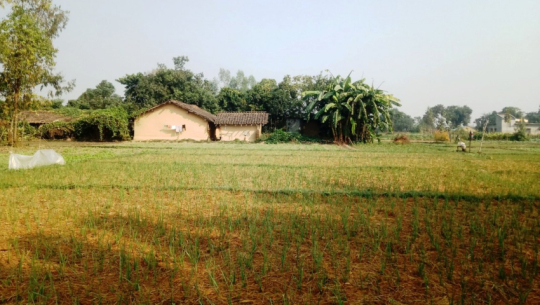
Kanchanpur: Farmers in Pipaladi, Shuklaphanta Municipality-3, Kanchanpur, have been earning good income by cultivating garlic using the zero-tillage technique. After harvesting rice, they are now busy planting garlic directly in the paddy fields without tilling the soil.
Janaklal Dagoura, a local farmer, has been practicing garlic cultivation for a decade following advice from an agricultural technician who visited the village. “Earlier, we used to plow the field, make beds, and plant garlic, but the yield was low,” he said. “If we plant garlic directly without tilling, the tubers are bigger and the yield is better.”
Dagoura, who plants garlic on five kathas of land, earns around Rs 90,000 annually from the crop. He explained that after harvesting rice, garlic cloves are planted directly in the middle of the field using a spade. If the soil lacks moisture, irrigation is done before planting. Afterward, farmers sprinkle cow dung and cover the field with straw, said another farmer, Binod Dagaura.
Farmers in Pipaladi have been treating garlic as a cash crop, with each household cultivating it on one to five kathas of land using the zero-tillage method. One katha produces about two quintals of garlic, which sells for Rs 300 to Rs 500 per kilogram during the season, providing an income of around Rs 30,000 per katha. “Earlier, we had to buy garlic for household use, but now we sell the surplus,” said farmer Cham Bahadur Dagaura. “Traders come directly to our homes to purchase it.”
Another farmer, Chunnulal Dagaura, noted that locally produced garlic grown under zero tillage is in high demand in the markets of Jhalari and Mahendranagar. “Garlic cloves grown in rice fields are large and flavorful, so they sell quickly,” he said.
According to Binay Raj Joshi, Agricultural Development Officer at the Municipality’s Agriculture Branch, the zero-tillage farming technique has reduced both the cost and effort involved in cultivation. “This method uses the natural moisture of the field without disturbing the soil structure,” he said. “Garlic cultivation under zero tillage provides high income with minimal effort, which is why more farmers in Pipaladi and nearby areas are adopting it.”
Joshi explained that one to two days after harvesting rice, farmers cut the stubble to about two inches and plant garlic using a hoe or iron tool. They then cover the field with a 10-centimeter-thick layer of straw, chaff, or hay to retain moisture, suppress weeds, and enhance soil fertility.
Garlic cultivation under zero tillage minimizes labor, time, and cost while preserving soil fertility. The method is also effective for climate adaptation. For pest management, farmers use homemade organic pesticides made from cow dung, wheat, and neem extract.

Dineshkhabar Desk