
Tourism at Shuklaphanta National Park remains low due to lack of promotion and infrastructure
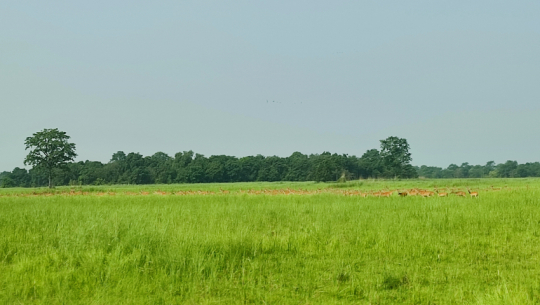
Kanchanpur: Despite being renowned for its rare wildlife and rich flora, Shuklaphanta National Park has not seen a significant increase in tourist numbers in recent years.
According to park statistics, 12,138 tourists visited the park in fiscal year 2075/76, including 308 foreign tourists, 350 from SAARC countries, and 11,480 domestic visitors. However, tourism, which slowed during the COVID-19 pandemic, has yet to recover. Visitor numbers remained low in subsequent years: 1,603 in FY 2076/77, 2,927 in FY 2077/78, 2,579 in FY 2078/79, 3,278 in FY 2079/80, 3,762 in FY 2080/81, and 3,371 in FY 2081/82.
Purushottam Wagle, information officer at the park, noted that both domestic and foreign tourist numbers have declined significantly since the pandemic. He attributed this to inadequate tourist infrastructure, challenges at the Nepal-India border, and a lack of publicity, adding that the park’s facilities remain insufficient and activities beyond jungle safaris are limited. Due to the low number of visitors, the park collected only Rs 2 million in entry fees and vehicle charges in the last fiscal year.
Tourism entrepreneurs echoed these concerns. Parmananda Bhandari emphasized that Shuklaphanta has high tourism potential but has not been prioritized by the government. Jagdish Bhatta, outgoing president of the Hotel Entrepreneurs Association, Kanchanpur, highlighted poor infrastructure, lack of skilled manpower, and limited promotion as key barriers to increasing tourism.
Shuklaphanta National Park, covering 305 square kilometers, is home to an impressive diversity of species, including 56 reptiles, 15 amphibians, 88 fish, 111 butterflies, 461 birds, and 56 mammals. Rare wildlife includes the leopard, one-horned rhinoceros, elephant, black rhinoceros, nilgai, leopard chital, hispid hare, and wild boar. The park also hosts over 2,323 rhinos and is famous for its large grasslands, lakes, and rivers, which support a variety of bird species such as storks, black tits, and kingfishers.
Despite its rich biodiversity and natural beauty, Shuklaphanta National Park continues to struggle with low tourist turnout due to insufficient government investment, inadequate promotion, and limited infrastructure, according to officials and tourism stakeholders.

Dineshkhabar Desk