
Blackbuck population surpasses 300 in Shuklaphanta, management challenges emerge
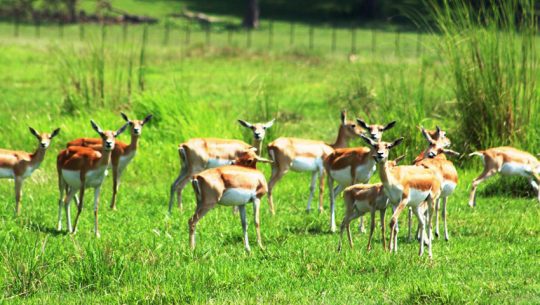
Kanchanpur: The number of rare wild animals, blackbucks, protected in the Hirapur Conservation Area of Shuklaphanta National Park has reached 313. Although the population has increased significantly over about a decade and a half since the conservation program began, managing the growing number has become increasingly challenging.
According to the park’s latest statistics, the population includes 81 adult males, 20 semi-adult males, 102 adult females, 26 semi-adult females, and 84 offspring whose sex has yet to be identified, informed Information Officer Purushottam Wagle. He stated that the number of blackbucks has been steadily rising due to the success of conservation efforts. “The main challenge now is management,” Wagle said, noting that a higher concentration in one area increases the risk of disease. He added that the department is studying options to release them into their natural habitat or relocate them to other suitable areas.
As per the decision of the Ministry of Forests and Environment, preparations are underway to rehabilitate black antelope in Chitwan by adjusting the male-female ratio from Shuklaphanta and Khairapur conservation areas of Bardiya. “This is also necessary to maintain genetic diversity,” said Wagle. “Rather than keeping them in one enclosure, it is more effective in the long term to spread them across different areas and improve the new generation according to a breeding management plan.” Currently, the black antelope are protected within a 58.8-hectare fenced area in Hirapur Phata. The conservation area, which began with 7.5 hectares in 2012, has been expanded in phases to its current size.
Given that black antelope prefer open grasslands, their release into natural habitats poses challenges, including threats from leopards, wild dogs, and poachers. Additionally, infectious diseases transmitted from stray animals remain a significant concern, Wagle said. The park has been working on conserving grazing areas, managing grasslands, and ensuring food supply by cultivating crops such as maize and lentils. However, he noted that a lack of regular budget has recently created difficulties in resource management.
In 2012, 22 black antelope—two adult males, four semi-adult males, 12 adult females, and four semi-adult females—were brought from the Nepalgunj Mini Zoo to Shuklaphanta for conservation. In the same year, six more were transferred from the Lalitpur Central Zoo for rehabilitation. In 2015, an additional 14 black antelope were relocated from the Khairapur Conservation Area in Bardiya. Altogether, 42 black antelope were introduced, and their number has since grown to 313, marking an approximately sevenfold increase over about a decade and a half, according to park statistics.
To maintain their health, the animals are regularly fed grain, bran, dhuto, maize, and gram. Medicated feed is also provided periodically to prevent infections from parasites such as worms and lice, Wagle informed. Under the National Parks and Wildlife Conservation Act, 2029, the black antelope is listed as a protected wildlife species in Nepal. Once abundant across the open grasslands of Nepal, India, and Bangladesh, the species became endangered due to habitat destruction, poaching, and natural disasters.
The Hirapur Conservation Area has also become an attraction for domestic tourists, who visit daily to observe the animals. The primary diet of the black antelope includes grass, dubo, siru, and kas, and in Hinduism, it is regarded as the ‘friend of Lord Krishna.’ Bharat Bahadur Bista, chairman of the Sundevi Consumers’ Committee, emphasized the need to further develop the Krishnasar Conservation Area as an organized tourist destination. He noted that a homestay program has already been initiated in the nearby Simalphanta settlement.
“It is necessary to improve the quality of homes and facilitate tourist visits to the Krishnasar Conservation Area,” Bista said, adding that such initiatives would boost local income and increase the park’s internal revenue. He stressed the importance of investing in tourism infrastructure. Assistant Chief Conservation Officer Vinay Kumar Jha stated that alongside blackbuck conservation, priority has also been given to promoting eco-tourism, with ongoing efforts to balance conservation with local community participation.

Dineshkhabar Desk