
OCMC in Nepal: Bridging the gap between policy and practice
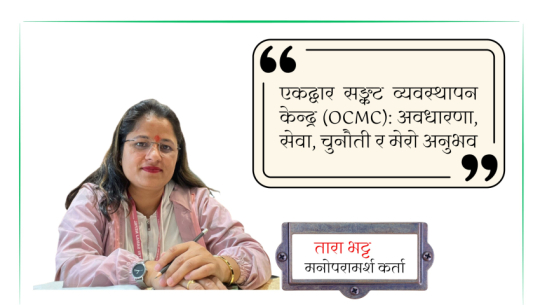
Dhangadhi: The Government of Nepal has launched the One Stop Crisis Management Center (OCMC) with the objective of providing essential services to women, children, and individuals affected by gender-based violence in an accessible and coordinated manner. Operated through government hospitals under the leadership of the Ministry of Health and Population, OCMC has been established as a crucial social safety mechanism for survivors of violence.
The core concept of OCMC is straightforward — individuals affected by violence should not be required to visit multiple institutions for services such as medical treatment, psychosocial counseling, legal assistance, protection, shelter, and rehabilitation. Instead, all necessary services are intended to be available from a single location.
According to the directive, OCMC is mandated to provide immediate healthcare services, psychosocial counseling, legal facilitation, coordination with law enforcement, safe shelter, rescue, and rehabilitation. The system also emphasizes the protection of the privacy, dignity, and rights of service recipients.
While the framework appears effective in principle, its implementation in practice raises important concerns.
The gap between policy and practice
Having worked in OCMC for the past five years across different hospitals, my experience reveals a significant gap between policy provisions and practical implementation.
In a previous hospital where OCMC was operated under the Gender-Based Violence Prevention and Response Program run by CMC Nepal with the support of UNFPA, services were relatively well-managed. Adequate manpower, resources, coordination, and service delivery mechanisms ensured that service recipients could easily access necessary support.
In contrast, the current hospital lacks direct support from any external project. As a result, many services outlined in the guidelines are either unavailable or weakly implemented. Some services exist only nominally, while others lack proper systems for delivery.
This situation has not only limited the expected support for survivors but has also increased the risk of deepening their distress and vulnerability.
Budget allocation without visible impact
Although a budget is allocated annually for OCMC operations, questions remain regarding its effective utilization. Ideally, service recipients should directly benefit from these allocations. However, in many instances, even basic rights and services are not fully accessible, raising concerns about transparency, accountability, and efficiency in budget utilization.
Lack of manpower as a major challenge
Adequate human resources are essential for the effective functioning of OCMC, yet this remains one of its weakest areas. Many hospitals lack full-time case managers, trained psychosocial counselors, dedicated nurses, and doctors. Multi-sectoral coordination teams are often not actively mobilized.
In most cases, a single focal person is assigned responsibility for administrative tasks such as meetings, reporting, and coordination. This limited staffing structure is insufficient to achieve the intended objectives of OCMC.
Absence of true one-stop service
The defining feature of OCMC is its “one-stop service” approach. However, in practice, many service recipients are still required to visit multiple locations — one for treatment, another for legal procedures, another for psychosocial support, and additional offices for other services.
This not only increases the burden on survivors but also undermines the fundamental purpose of establishing OCMC.
The way forward
To make OCMC more effective and result-oriented, several key reforms are necessary:
- Ensure full implementation of the operational guidelines.
- Establish a permanent and adequate human resource structure.
- Promote transparent and service-recipient-focused use of allocated budgets.
- Strengthen monitoring mechanisms and social accountability systems.
- Enhance coordination among health, security, legal, and psychosocial sectors.
- Create a sustainable operational model led by the government, reducing dependency on development partners.
Conclusion
OCMC represents a highly important and humanitarian initiative of the Government of Nepal. While its objectives are commendable, effective implementation is equally critical.
Experience shows that where adequate resources, manpower, and management systems are in place, service recipients receive quality care. However, in their absence, there is a risk that OCMC will remain only a symbolic initiative.
The true purpose of OCMC cannot be achieved unless survivors of violence are provided with dignified, safe, and high-quality services. It is therefore imperative for the government to prioritize effective implementation, ensure sufficient resource allocation, and establish a strong, accountable service delivery system.
Tara Bhatta
Consultant

Dineshkhabar Desk