Nepali army celebrates 263rd army day with Mahashivaratri ceremonies
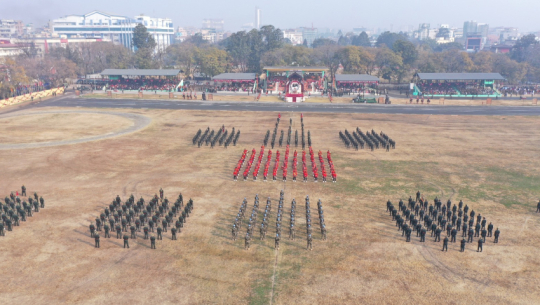
Kathmandu: The Nepali Army is celebrating its 263rd Army Day today with various programs organized across the country. A special Mahashivaratri celebration and Army Day ceremony are being held at Sainik Tundikhel under the chief guestship of President Ram Chandra Poudel, who serves as the Supreme Commander of the Nepali Army.
Traditionally, the Army celebrates Mahashivaratri as Army Day. The program includes a parade, cannon display, military demonstrations, and cultural performances at the Army Manch alongside the Shivaratri observances. Army Spokesperson Rajaram Basnet stated that Army Day programs are also being conducted at units, battalions, regiments, diplomatic missions, and UN peacekeeping missions.
History and International Role
The Nepali Army has a long history of protecting Nepal’s independence, territorial integrity, and sovereignty. Its current organizational structure dates back to 1819. Over the years, the Army has earned public trust through its dedication, patriotism, and commitment to national interests. Upholding discipline, the chain of command, an apolitical character, and unity remain core values of the organization.
The Army has built a reputation for reliability both nationally and internationally, with increasing inclusivity and growing participation of women. Since 1958, the Nepali Army has contributed 162,496 personnel to 44 United Nations peacekeeping missions, with 74 soldiers sacrificing their lives and 77 injured in the line of duty. Currently, 4,302 Nepali peacekeepers, including 391 women, are deployed in 10 missions worldwide, positioning Nepal as a leading contributor of female soldiers.
Nepal has become a training hub for soldiers from many countries, hosting programs at the Birendra Peacekeeping Training Center, the Military Academy in Kharipati, Bhaktapur, and the Army Command and Staff College in Shivapuri.
Domestic Contributions
The Nepali Army also plays a significant role in disaster management, road infrastructure, and national development projects, including the Kathmandu-Terai Madhes Expressway. Additionally, the Army ensures the protection of palaces, forts, museums, historical sites, power plants, and natural heritage, while contributing to environmental preservation and community development.
Ahead of the upcoming House of Representatives elections, the Army is implementing an integrated security plan to maintain a safe, free, fair, and fear-free environment for voters.

Dineshkhabar Desk