
Over 515 hectares of Shuklaphanta National Park encroached
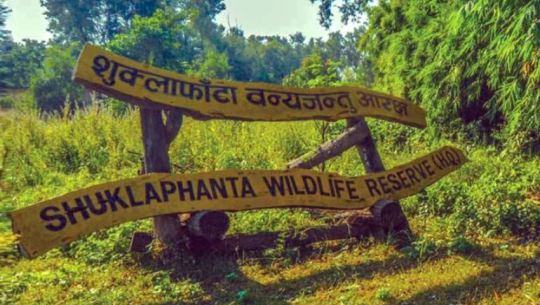
Dodhara Chandani (Kanchanpur): A total of 514.31 hectares of Shuklaphanta National Park has been encroached, with approximately 374.42 hectares affected in Dhaka, Tarapur, and Lallare Danda. Additionally, around 139.89 hectares have been encroached upon in the Nepal-India border area near Pillar No. 28, according to the park office.
Park Information Officer Purushottam Wagle stated that displaced families continue to live in the encroached areas following the expansion of the former Shuklaphanta Reserve. He reported that 604 families reside in Dhaka, 155 in Tarapur, and 13 in Lallare. Indian citizens have reportedly encroached on about 139.89 hectares of the park in the border area near Pillar No. 28.
Wagle highlighted that human settlements in the core area of the park are adversely affecting wildlife habitats. “People displaced from the park are living in the core area, which is causing problems for the habitat of wildlife. Even residents here cannot access minimum services, affecting both humans and wildlife,” he said.
The encroachment in the core area has persisted due to unresolved issues concerning displaced people. Despite the formation of 33 commissions to address the matter, the problem remains unresolved. Encroachment has also occurred between Pillars No. 28 and 27 on the Nepal-India border, an area now disputed due to the absence of a sub-pillar between the main boundary markers.
“Indian citizens have been farming in this area, while Nepal also claims the land. Last Jestha, the Nepali Army and the National Park Office jointly established a post near Pillar No. 28,” Wagle informed. He added that the army has set up posts and is conducting patrols in areas where encroachment by Indian citizens is occurring.
Currently, there are 15 joint security posts of the Nepali Army and National Park Office across the park, with army troops deployed from three separate posts.
According to the park office, encroachment by displaced people, who were relocated during the 2058 BS expansion of the eastern area of the former Shuklaphanta Reserve, has contributed to increasing human-wildlife conflict. Over the past decade, 17 people—including three women and 14 men—have died in wild elephant attacks within the park.