Banarasidham in Baitadi: A 418-year-old symbol of caste equality and untapped religious tourism potential
Kanchanpur: Despite constitutional and legal prohibitions against caste discrimination, remnants of social inequality continue to persist in many sectors of society, particularly in rural areas. While political, social, and intellectual forums have widely advocated for equality, inclusion, and social justice, establishing these principles in practice remains a challenge.
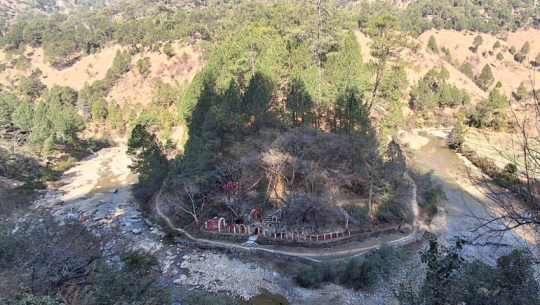
Banarasidham and Vishwanath Jyotirlinga Shaktipeeth, located in Patan Municipality-3, Baitadi, Sudurpaschim Province, stand out as historical sites where the practice of social equality began 418 years ago. Dalit and Brahmin priests have been worshipping together in the same Dham area since then, making Banarasidham a “living museum” against caste discrimination. However, the temple’s development has lagged behind, with a master plan worth crores of rupees remaining largely on paper due to insufficient budget.
Historian and researcher Acharya Pandit Ganesh Prasad Pant notes that the temple’s history dates back to the reign of Maharaja Manuk Chand of the then Swarad region, around 1604 AD, a time when caste discrimination was pervasive. To address social divisions, the King instructed his royal guru and astrologer, Birbhadra Pant, to find a solution. A historic meeting of representatives from various castes, including Pandits, Bhatts, Bhats, Bistas, Awasthis, Koli, Damai, Luhars, Kumals, and Paharis, resulted in a landmark decision: caste discrimination should not exist in religious practice. Subsequently, Dalit priests were appointed alongside Brahmins, a tradition that has continued uninterrupted for over four centuries.
Maniram Koli, vice-president of Banarasidham Vishwanath Seva Samaj, describes this decision as a major social reform movement. Even today, devotees receive prasad, perform puja, and apply tika from Dalit priests, while Brahmin and Dalit priests conduct rituals together, reflecting a centuries-old message of equality, coexistence, and inclusion.
Banarasidham also holds significant religious importance. Described in the Manaskhanda of the Skanda Mahapurana, it is believed that Lord Shiva directed celestial beings to construct the temple at the confluence of the Sarayu and Gomti rivers, at the foot of Nil Parbat. The Vishwanath Jyotirlinga is worshipped in 84 forms and honored with 84 siddhas, drawing thousands of devotees from Nepal and India, particularly during the 22 Lake Kumbh Mela in Magh.
Despite its religious, historical, and social significance, Banarasidham faces development challenges. The temple area, managed by Banarasidham Vishwanath Guthi, covers 666 ropanis of land. While local communities have constructed the temple, stairs, walls, and a 75-foot-high temple through donations, large-scale infrastructure projects—including bridges, road expansion, dharamshala, toilets, drinking water, embankments, and accommodation for visitors—remain incomplete due to lack of state funding. The committee has prepared a detailed project report worth 188 million rupees, but only a fraction of the budget has been allocated, leaving the committee in debt.
Temple officials emphasize that proper investment in infrastructure and religious tourism could transform the area’s economy, creating employment in hotels, shops, transportation, guiding, handicrafts, and local agriculture. Chief priest Dhire Luhar stresses that Banarasidham, with its religious, historical, and social importance, has the potential to become a major religious tourism destination in the Far West, but continues to be overlooked by the state.
Banarasidham is more than a religious site—it is a historical testament against caste discrimination, a symbol of equality, and a center with significant potential for socio-economic development. Comprehensive development and investment are essential to preserve its heritage and maximize its impact.