
Tharu community observes Ashtimki festival with fasting, songs and traditional rituals
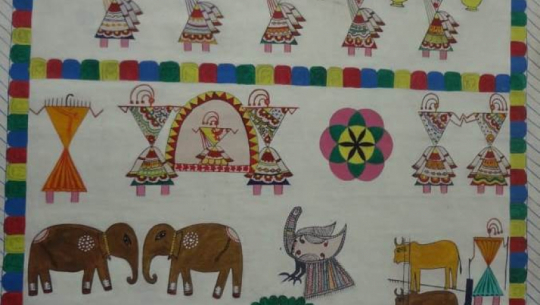
Dhangadhi: The Tharu community in the western Tarai is celebrating the Ashtimki festival, a two-day cultural and religious observance that began on Saturday.
Tharu women mark the festival—linked to life, nature, love, folk culture, animals and lifestyle—by observing fasts and performing traditional rituals. The festival, which begins with Shri Krishna Janmashtami, concludes on the second day when various food items are given as gifts to married daughters.
Kabita Chaudhary of Baijpur, Kailari Rural Municipality-5, said the songs of Ashtimki reflect themes of life, the origin of the earth, folk traditions, and the Tharu way of life, making the festival integral to the community’s identity.
According to tradition, those fasting eat Bhinsarya rice (dar) at midnight and then remain without food for the rest of the day. On the first day, Ashtimki murals are created on the walls of houses or in the Dehri (earthen food storage barn), depicting figures such as Roina, Doli, Kajrik Banwaan, Rauna, Puranik Phula, Lau, Raini Machhari, Sukhli Kukaniya, and Machchi. In the evening, women perform puja and Ashtimki rituals, dressed in traditional attire, and eat fruits such as mango, banana, apple, cucumber, and watermelon.
Throughout the night, devotees remain awake singing Ashtimki songs in a tradition known as Dengya Gaina. According to writer Chhabilal Kopila, these songs narrate stories of nature, creation, and human lifestyle. The following morning, devotees recite Ashtimki prayers before going to nearby rivers or streams to perform rituals, returning home to prepare and eat dishes such as rice, phulauri, khariya, fish, and gedagudi. Before eating, a portion of each dish is set aside in a ritual called farhar.
The reserved dishes are later sent as gifts to married daughters living in distant villages, a custom known as Agrasan.
According to legend, the festival originated when seven brothers went into the forest to make a plow and were lost for several days. Their worried wives refrained from eating or lighting fire in the house. Upon the brothers’ safe return, the wives bathed, cooked various dishes, and celebrated together with their families. Since then, the Ashtimki fast has been observed.
The festival, locals say, strengthens intimacy, harmony, and mutual love within the Tharu community.

Dineshkhabar Desk