
Tikapur women engaged in collective off-season vegetable farming to boost income
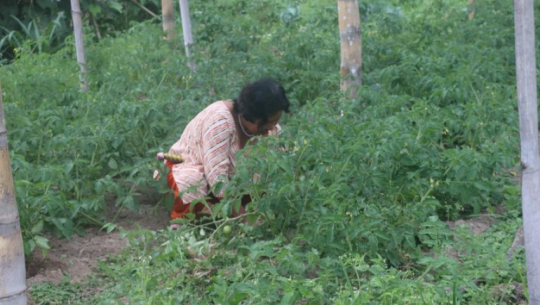
Tikapur: Women in Tikapur, Kailali, have engaged in off-season vegetable farming to increase their income. In Satgharuwa of Tikapur-1, women have collectively cultivated off-season vegetables for their livelihood. In the Milijuli Farmers Group of Satgharuwa, 23 women from the disadvantaged community have been selected, organized into a group, and involved in vegetable farming.
After joining the group, these women, who were previously wage laborers, have begun farming on 12 kathas of leased land. They have received training through the local initiative project for community empowerment and development, Digo Bikash Samaj Bhajani, in coordination with the agricultural development branch of the local municipality, which has provided them with knowledge on off-season vegetable farming.
At present, vegetables such as cauliflower, tomato, chilli, okra, and potato have been cultivated in their fields. Potatoes planted in Mangsir are ready for sale. Students from the Faculty of Agricultural Sciences at Sudurpaschim University are also providing technical support to these women farmers engaged in off-season vegetable production. Technical student Laxmi Tharu said that they are studying the production outcomes of different farming methods and technologies and sharing that knowledge with farmers. “We are teaching them how to do the same cultivation in different ways,” she said, “We are also teaching them how to conserve crops, protect the environment, and achieve higher production.”
Asha Chaudhary, who is aware of the challenges faced by women while balancing farming and livelihood, said that life has become easier for women who were earlier wage laborers after they started earning income. “Now they don’t go for wage labor; they work in their own fields, and vegetables are sold from home. They are happy earning income from farming,” she said.
Farmer Krishna Chaudhary, along with 23 other women, previously worked as wage laborers. She said that after the land was leased for vegetable cultivation under the project, income from vegetable farming has helped them manage household expenses and overcome difficulties. “The land has been leased for two years, and we will cultivate and earn income,” she said. “We have learned a lot; after many years of hard labor, we now know a way to earn income and see a future in vegetable farming.”
Similarly, women in Dashgharwa have also cultivated onions, which are now ready for sale. Since the women farmers produce organic vegetables, there is no issue in the market. They sell some produce locally and the rest in the agricultural market. They say farming would be easier if the local municipality provided subsidies, agricultural tools, poly houses, and other necessary materials.

Dineshkhabar Desk