
Timber access remains difficult for consumers despite abundant forest resources in Kailali
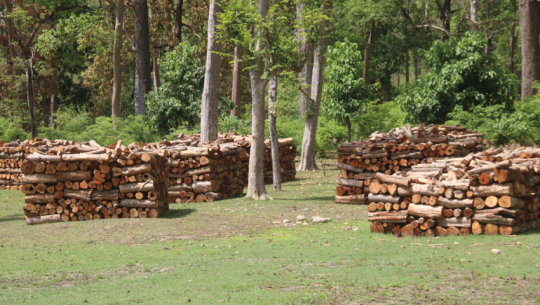
Kailali: Despite the presence of extensive forest resources, consumers in Kailali are facing significant difficulties in obtaining timber for personal use.
Bimala Budhathoki of Ghodaghodi Municipality-1, Sukhkhad, who is also a member of a nearby community forest, expected easy access to wood for building her new house. However, she said the process proved challenging. “I thought that since I am a member of the forest, it would not be a problem, but it turned out to be very troublesome, so I had to pay a high price and bring wood from the mill,” she said.
Similar concerns are shared by many residents across the district, including those in Ghodaghodi. Kailali and neighboring Kanchanpur are among the districts with the largest forest areas in the country, home to valuable timber species such as sal, sisau and khair, which are widely used in construction and furniture production. These forests contribute significantly to local employment, community income and state revenue.
However, in recent years, fallen and dried trees resulting from natural disasters have not been collected in time. As a result, such timber often rots in the forest, is stolen or destroyed by fire.
Jograj Chaudhary, chairman of Singhapur Community Forest in Kanchanpur, said that large quantities of wood remain unused due to procedural delays. “The wood is rotting in the forest, but it cannot be collected until the process is completed. That is why local consumers are not getting wood even in times of need,” he said.
Community forest user groups, despite their key role in forest conservation, are unable to utilize fallen and dried wood within their own forests due to regulatory constraints. While annual forest action plans permit the cutting of a limited number of trees, additional fallen trees cannot be used without approval.
Nar Bahadur Sodari, chairman of the Budho Betal Community Forest User Group in Kailali, explained that the process for collecting such wood involves decisions by the District Disaster Management Committee, recommendations from the Provincial Forest Directorate and approval from the Provincial Forest Ministry. “Even if a tree falls, we are not allowed to collect more than the number specified in the annual action plan. While completing the process, the wood deteriorates,” he said, emphasizing the need for practical solutions.
Delays in issuing felling orders after field inspections further complicate the process, said Suresh Chaudhary, chairman of Jan Jyoti Sonia Community Forest in Bhajani Municipality-9. He added that delays sometimes affect timber exports, reducing its value due to deterioration.
Shishir Chand, chairman of Laligurans Community Forest in Gauriganga-4, noted that it can take up to three months to receive permission even after submitting the required documents. He stressed the need for a more efficient and scientific system for utilizing forest products.
The accumulation of dry wood is also increasing the risk of forest fires. Pushkal Bam, chairman of the Basanta Forest Conservation Area Council, warned that large quantities of dry wood heighten fire hazards, leading to significant losses and increased resource expenditure.
Bal Bahadur Mahata, chairman of the Gauriganga Partnership Forest Users Group, said partnership forests face similar challenges, with limited consumer rights and lengthy procedures. Yadav Prasad Bhandari, secretary of the Partnership Forest Users Federation, attributed the issue to the current legal and administrative structure. “We have to visit three levels of offices to collect a fallen tree. Consumers are not the real owners in practice,” he said.
Om Prakash Sapkota, chairman of the Community Forest Coordination Committee, Masuria, emphasized that although rights exist on paper, consumers are often excluded from decision-making in practice. He called for making the system more practical and accessible.
Lal Bahadur Shahi, a member of the Kailali Environmental Protection and Forest Products Entrepreneurs Association, suggested ending the practice of initiating logging only after the fiscal year ends to address the issue.
Ranger Nawaraj Upadhyay of the Sub-Division Forest Office, Chaumala, said that while technical processes are completed at the field level, final decisions are made at higher levels, causing delays. He emphasized the need to simplify procedures to resolve ongoing issues in the forest sector.
Sudurpaschim Province Forest Director Hemraj Bista acknowledged that delays are also influenced by internal disputes within community and partnership forests. He stated that while the procedures are intended to ensure transparency and prevent irregularities, both administrative shortcomings and internal challenges need to be addressed.
Dandiraj Subedi, central general secretary of the National Federation of Community Forest Users, Nepal (N-FECOFON), said the issue has been raised with the Ministry of Industry, Tourism, Forest and Environment. He noted that delays in implementing the Forest Act and regulations have hindered proper utilization of forest resources.
“Our forests are rotting, yet we are forced to import timber for essential needs,” he said, adding that multiple taxes and procedural delays have negatively affected forest management. He informed that a memorandum highlighting these concerns was submitted to the provincial government’s relevant ministry on Tuesday.