Two-day workshop in Dhangadhi calls for fair distribution of carbon emission reduction benefits
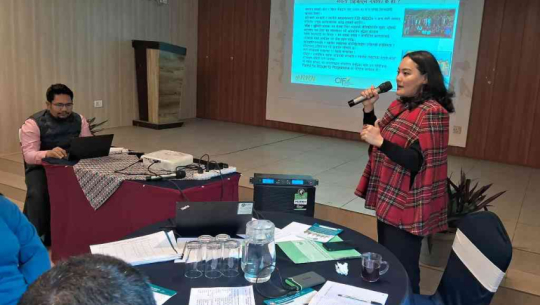
Dhangadhi: Stakeholders have stressed that the benefits Nepal receives for its role in reducing carbon emissions must be fairly distributed to the grassroots level. Speaking at a two-day workshop on emission reduction held in Dhangadhi under Nepal’s REDD+ initiative, participants emphasized that indigenous and marginalized communities, who play a key role in protecting forests, should receive equitable benefits.
At the workshop organized by the Dedicated Grant Mechanism (DGM) Nepal and Rural Rehabilitation Nepal, forest expert Rupesh Kalakheti highlighted the environmental impact of carbon emissions and noted that Nepal has suffered significant losses despite contributing minimally to global emissions. He stated, “As Nepal is suffering a lot due to carbon emissions, the compensation amount is about to be received. The World Bank has already provided Nepal with the first installment of Rs 1.32 billion just two days ago.”
Lucky Chaudhary, President of the Federation of Indigenous Journalists of Nepal (FONIJ), said that indigenous and marginalized groups, who have long been involved in forest conservation, are still not able to benefit from water, forest, and land resources as expected.
The workshop noted that various programs are being implemented to reduce emissions through sustainable forest management by developing forests and reducing destruction and degradation. In the REDD+ program, benefit sharing refers to the fair distribution of monetary and non-monetary gains received from reducing carbon emissions in the forest sector among stakeholders who contribute to the effort.
Nepal, a signatory to several international environmental treaties, including the United Nations Framework Convention on Climate Change (UNFCCC), has been engaged in the REDD+ process since 2008. With support from the World Bank’s Forest Carbon Partnership Program (FCPF), Nepal formally began implementing REDD+ preparation programs in 2010.
Carbon dioxide emissions have contributed to climate change impacts in Nepal, including unseasonal rainfall, increased risks of flooding and landslides, soil erosion, dry landslides, and rising temperatures. Factors such as fires, industrialization, waste, agriculture, animal husbandry, transportation, deforestation, and land use changes continue to affect the climate.

Dineshkhabar Desk