Parliamentary committee passes school education bill; Private investment allowed in Schools
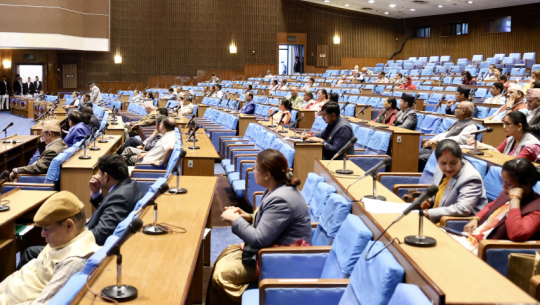
Kathmandu: The Education, Health, and Information Technology Committee of Parliament has passed the School Education Bill after extensive debate and amendments. The bill now allows the establishment and operation of schools not only through Guthi but also through private investment.
Key Provisions of the Bill
The bill permits schools to operate with both private investment and Guthi funding. It also allows the medium of instruction to be Nepali, English, Sanskrit, or the local mother tongue. Local-level examinations will be conducted in Grade 8, provincial examinations in Grade 10, and national examinations in Grade 12. Principals will be selected through competitive procedures and will serve a five-year tenure. Early childhood education is mandated for two years, and primary education before Grade 1 should not exceed two years.
Private schools must provide a minimum 10 percent scholarship, while residential schools must allocate 3 percent of beds to underprivileged students. The bill also mandates at least 220 days of compulsory education annually.
Fee Transparency and Control
Private schools are required to publish fee structures at least two months before the academic session. If fees are not published, local authorities can order disclosure within seven days.
Teacher Appointment, Transfer, and Promotion
Teacher appointment age is set at 21–35 years for men and 21–39 years for women, with no age limit for current relief or contract teachers. For initial recruitment, 60 percent of posts will be filled through competition among current teachers and 40 percent through open competition. Promotions will be based 20 percent on internal competition, 40 percent on seniority and performance evaluation, and 40 percent on efficiency evaluation. Local-level transfers are allowed after two years, and inter-provincial transfers are permitted after five years.
Conduct and Restrictions
Teachers are prohibited from participating in strikes, demonstrations, and polygamy. Principals are prohibited from participating in Teachers’ Federation activities. A School Management Association will be formed by the School Management Committee, and a Parents’ Association can be formed by students’ parents.

Dineshkhabar Desk