
Upcoming budget to prioritize ongoing projects, mandates cost-benefit analysis for new plans
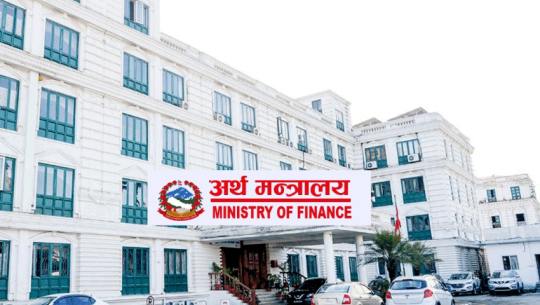
Kathmandu: Preliminary discussions have begun with ministries to ensure adequate budget allocation for the timely completion of ongoing and sequential projects, while requiring cost-benefit analysis for proposing new plans and programs that can be implemented immediately.
The National Planning Commission has introduced a budget formulation ‘checklist’ aimed at making the process for the upcoming fiscal year 2083/84 more disciplined, result-oriented and realistic. According to the Commission’s Assistant Spokesperson Dr. Diwakar Luintel, discussions are being held with key ministries, including the Office of the Prime Minister and Council of Ministers, Ministry of Federal Affairs and General Administration, Ministry of Culture, Tourism and Civil Aviation, and Ministry of Health and Population.
Further discussions are scheduled with the Ministry of Forest and Environment, Ministry of Labor, Employment and Social Security, Ministry of Physical Infrastructure and Transport, and Ministry of Urban Development. The Commission has already held discussions with several ministries, including the Ministry of Home Affairs, Ministry of Land Management, Cooperatives and Poverty Alleviation, Ministry of Youth and Sports, Ministry of Women, Children and Senior Citizens, Ministry of Finance, Ministry of Foreign Affairs, and Ministry of Law, Justice and Parliamentary Affairs.
According to the Commission, ministries are required to propose only those plans and programs that are supported by detailed justification and are ready for implementation. Emphasis has been placed on including projects that can deliver immediate results.
Finance Minister Dr. Swarnim Wagle has stated that a transformative budget will be introduced for the upcoming fiscal year. In line with this, the Commission, in coordination with the Ministry of Finance, has instructed ministries to determine priorities through discussions before submitting proposals. A strategy has also been adopted to ensure sufficient budget allocation for projects already underway in the current fiscal year.
Ministries are required to include physical and financial progress reports of current projects, along with analysis of challenges faced during implementation. They must also clearly present the status of projects of national pride and major programs listed in the project bank to facilitate progress assessment.
The government has emphasized aligning the budget with the 16th Plan. Ministries must outline transformational strategies and propose major programs and projects with realistic projections of resources and expenditures within the budget ceiling and medium-term expenditure framework for fiscal years 2083/84 to 2085/86.
In accordance with the Financial Procedures and Financial Responsibility Act, 2076, proposed projects must include feasibility studies, environmental assessments, detailed project reports, design, cost estimates, land acquisition status, implementation schedules and procurement plans, along with expected returns.
Details of resource assurance for projects of national pride and multi-year projects must also be submitted to enhance transparency in budget commitments. Priority will be given to projects that offer quick returns, can be completed within the stipulated time and cost, and are expected to be completed within the upcoming fiscal year.
Projects under implementation must be categorized based on priority, with clear lists of those to be continued, reviewed or canceled. Ministries are also required to separately present plans for restructuring or reviewing projects, along with details of incomplete and stalled projects, to improve long-term project management.
It will also be mandatory to disclose whether financial liabilities from previously completed projects have been included in the budget. Proposals must adhere to the Project Classification Basis and Criteria, 2080, ensuring that only projects appropriate for federal implementation are included.
The Ministry of Finance had initially set a deadline of Chaitra 15 for submitting plans and programs through the Line Ministry Budget Information System (LMBIS). However, the deadline has been extended due to limited preparatory work following the formation of the new government.
According to Dr. Luintel, flexibility has been provided in submitting proposals in LMBIS. The extension aims to incorporate provisions from the ruling party’s election manifesto, the governance reforms approved by the Cabinet on Chaitra 13, the good governance roadmap, and the priorities for 2082 into the upcoming budget.

Dineshkhabar Desk