
Bird flu outbreak spreads to 11 districts, confirmed in 82 locations across the country
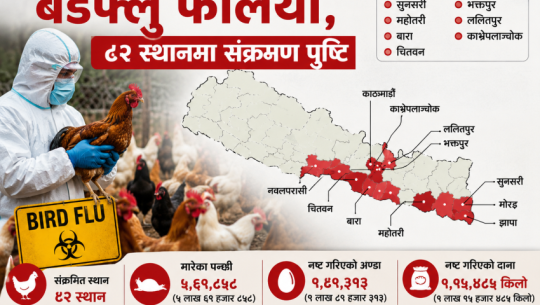
Kathmandu: Bird flu infection has spread across 11 districts of the country. According to a report released by the Department of Animal Services, this deadly infectious disease, which has been observed in various parts of the country over the past three months, has so far been confirmed in 82 different locations across 11 districts through laboratory tests.
According to the department, the infection, which began in Morang on 4 Chaitra 2082, has now spread to Jhapa, Sunsari, Mahottari, Bara, Chitwan, Nawalparasi, Kathmandu, Bhaktapur, Lalitpur, and Kavrepalanchok.
To control the outbreak, the department has established a Bird Flu Disease Control Room under the leadership of the Deputy Director General and has mobilized necessary manpower in the affected areas. According to Director General Dr. Umesh Dahal, a large number of birds and related materials have been destroyed as part of disease control efforts. So far, 569,858 birds have been culled in the infected areas.
Similarly, the department stated that 989,313 eggs and 195,485 kg of feed have been safely destroyed. The operation was carried out through a rapid task force in coordination with the Chief District Officer of the respective districts.
According to the department, the infection has been brought under control to some extent in Koshi Province, and the ban on the movement of birds has been relaxed in the initial phase. However, the risk remains high in Kathmandu, Bhaktapur, and Lalitpur as the infection continues to spread within the Kathmandu Valley.
To control the outbreak, rapid diagnostic testing is being conducted through the Central Animal and Poultry Disease Investigation Laboratory and other national laboratories. The department also stated that emergency disease investigation teams are being deployed immediately after detection and risk assessments are being carried out. In addition, virus sequencing work is being advanced in coordination with the National Public Health Laboratory to determine any changes in the nature of the virus.
The Department of Animal Services has urged poultry farmers to remain highly alert, strictly follow biosecurity standards in farms, and immediately report any unusual symptoms or sudden deaths in birds to the nearest animal service center. It has also requested that poultry products be transported only with a mandatory veterinary health certificate.
The department further stated that laboratory tests have confirmed that, along with bird flu, diseases such as low pathogenic avian influenza, Ranikhet, and E. coli have also contributed to high mortality in birds. Farmers have been urged to adopt regular vaccination programs and safely dispose of infected birds to prevent such multiple infections.

Dineshkhabar Desk