
Buffer zone residents seek firm commitment from candidates to curb wildlife threat
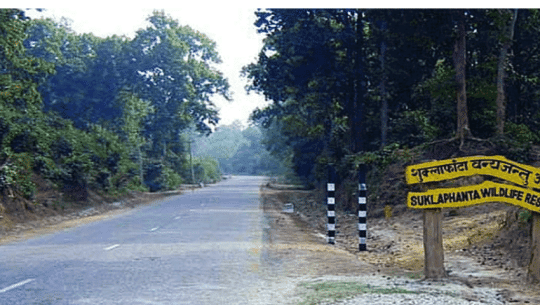
Kanchanpur: Residents living in the buffer zone of Shuklaphanta National Park are seeking a candidate who will prioritize reducing wildlife threats as a key electoral issue.
Wild boars, nilgai, chital and elephants entering settlements and farmland from the park have been causing significant crop damage each year. Locals report recurring incidents of tigers and leopards dragging cows, buffaloes and goats from sheds and killing them.
Gangaram Dagaura, 65, of Pipaladi in the buffer zone, said that strong scaffolding, electric mesh wire, solar lights and flashlights are essential to protect crops. “Since the park is located near the settlement, wild animals leave nothing behind. They can be monitored and chased away from scaffolding, but there is no structure. There is a high risk of attack when going to the fields on foot,” he said. “Despite making demands for years, no response has been received. We need a candidate who will respond and act.”
Similarly, 60-year-old Kide Dhanuk of Khajuwa said that the mesh wire installed in the area has been destroyed by elephants and rain within a year. “In some places elephants have torn it down, elsewhere it has been washed away by floods, and it has not been repaired,” he said. He added that strong electric fencing, embankments along the Siali River, blacktopped roads and irrigation systems are among the main demands. More than 60 families reside in the Khajuwa area alone.
Mahesh Mahara of Jonapur said he would vote only for candidates committed to installing effective mesh wire in sensitive wildlife entry points, improving road infrastructure and controlling rivers. “Just a month ago, two advanced cows brought by a neighbor on loan were dragged out of the cowshed by a tiger and killed, and we have not been able to receive compensation,” he said. He also noted that elephants have been destroying ripening rice, wheat and sugarcane crops.
The buffer zone spans 243.5 square kilometers and includes 48 wards of five municipalities and two rural municipalities. A total of 38 user committees have been formed in the area. Through these committees, relief and compensation programs, including mesh wire installation, improved stoves and lighting, have been provided to residents affected by wildlife.
The park administration states that programs focusing on biodiversity conservation, community development, income generation and reducing human-wildlife conflict are being implemented through the management committee.
However, local residents maintain that these efforts are insufficient and expect candidates to present a long-term and reliable plan. “We need a clear commitment to control wildlife threats, simplify and make the compensation system effective, and develop basic infrastructure,” is the collective demand of the locals.

Dineshkhabar Desk