Leprosy remains a challenge in Far-west Nepal despite national eradication
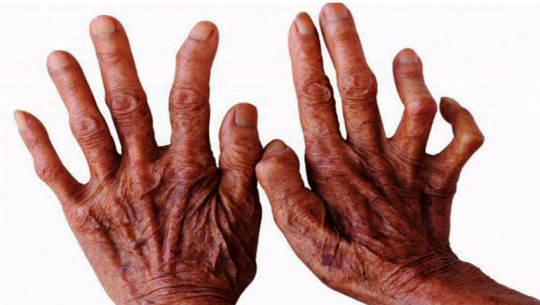
Kailali: Although Nepal was declared a leprosy-free country in 2010, the disease continues to pose a problem in several districts, including Kailali. Health officials report that 16 districts across the country, including Kailali, face challenges with newly diagnosed leprosy cases. Manoj Ojha, TB officer at the Health Directorate in Dipayal, noted that the detection rate of the disease in Kailali is increasing.
“Leprosy has been declared eradicated nationwide,” Ojha said. “However, about 68 percent of the patients reported in Far West Province each year are from Kailali.” He added that eradication efforts are hindered because patient detection rates have not significantly declined.
According to Ojha, national statistics indicate that 0.8 to 0.9 patients are detected per 10,000 population, while the World Health Organization considers the disease eradicated if fewer than one patient per 10,000 is found. A recent additional criterion requires that no children under 15 years of age contract leprosy for five consecutive years at the local level. The government has set a target to eliminate leprosy entirely by 2030.
Efforts to achieve this goal include active search and tracing of leprosy patients, public awareness campaigns, and management of multi-drug therapy. “Free medications are being provided to identified patients. In Far West Province, these search and tracing activities are focused on Kailali, Kanchanpur, and Achham districts,” Ojha said.
Health workers emphasize that changing social attitudes toward leprosy is a greater challenge than treating the disease. Many affected individuals hide their condition due to stigma, complicating early detection and increasing the risk of spread. This delay in treatment can lead to disability and mental health impacts, explained Ramesh Kunwar, head of the Kailali Health Office. “Leprosy is contagious but completely curable with regular medication for up to two years, depending on symptoms,” he said.
Kailali and Kanchanpur continue to report high rates of new cases. According to Health Directorate data, while some districts show decreasing detection rates, urban and semi-urban Terai areas remain at risk. The prevalence of leprosy patients under treatment per 10,000 population at year-end is highest in Kailali at 1.57, followed by Kanchanpur at 0.75 and Achham at 0.69. Doti records 0.30, Dadeldhura 0.29, Darchula 0.23, Baitadi 0.08, Bajhang 0.04, and Bajura currently reports no patients under treatment.
Health officials cite multiple factors contributing to high incidence in the Terai districts, including high population density, internal and cross-border movement, poverty, poor sanitation, and limited public awareness. Open border interactions with India further increase the risk of disease transmission.