Irrigation scarcity hampers agriculture in fertile Kanchanpur plains
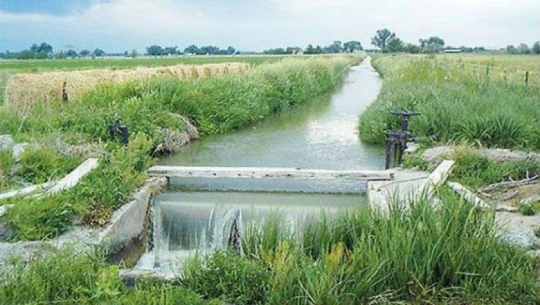
Kanchanpur: Despite being known as a fertile region and major food-producing area, large swathes of farmland in Kanchanpur, including Purnabas Municipality, remain without proper irrigation facilities, causing significant hardship for local farmers.
Tej Bahadur Chand of Purnabas Municipality-2, who rents and cultivates sugarcane on seven bighas of land, says the high water demand of sugarcane makes irrigation a costly challenge. “There are two sugar mills in the area, and sugarcane cultivation is high,” said Chand. “But the cost of boring for water is burdening us. In some places, boring doesn't yield water at all, further worsening the problem.”
The region, also ideal for rice and wheat cultivation, plays a vital role in feeding the hill districts of Far West Nepal. However, as farmer Surat Bahadur Malla of Purnabas Municipality-4 explains, the absence of irrigation forces many to rely solely on rainwater. “It has been two decades since the Mahakali River’s water was introduced. Seeds dry up without water, and we have no choice but to depend on rainfall,” he said.
While areas such as Beldandi and Belauri Municipalities have benefitted from irrigation under the second phase of the Mahakali Irrigation Project, Purnabas Municipality remains excluded. A survey was previously conducted to link a canal from the Mahakali system to this area, and farmers are still hopeful that the river’s water will eventually reach their fields.
The ongoing third phase of the Mahakali Irrigation Project aims to irrigate around 15,000 hectares of resettlement areas by 2086 BS. The government has designated the project a national pride initiative, expediting construction. Senior Divisional Engineer Rajesh Bhakta Pokharel reported that construction was initially delayed by issues such as budget constraints, land acquisition, and forest clearance. However, since the project was upgraded in status, work has accelerated, achieving 26 percent physical progress.
Last year, contracts were signed in five packages to construct the main canal from 28.8 km to 48.3 km, with a target of completion within three years. Yet, progress has lagged due to recurring obstacles. The project, launched in fiscal year 2062/63, has completed only 28.9 km of the main canal so far. Work on 22 branch canals is ongoing in areas where the main canal is operational.
Currently, irrigation reaches 11,699 hectares in Kanchanpur through the first two phases of the Mahakali Irrigation Project, initiated in 2042 BS and expanded in 2052 BS. These phases benefit Bhimdatta, Bedkot, and Beldandi Municipalities. However, limited water release from India during the dry season prevents water from reaching Belauri Municipality, exacerbating irrigation problems.
Once the third phase is complete, with its planned 151-kilometer-long main canal, the project is expected to deliver irrigation to 33,520 hectares across Kailali and Kanchanpur. According to the Agricultural Knowledge Center in Mahendranagar, Kanchanpur has 161,741 hectares of total cultivable land, with only 36 percent currently under cultivation and just 29 percent having access to irrigation.

Dineshkhabar Desk