
Rabies cases rising alarming rate in far west province
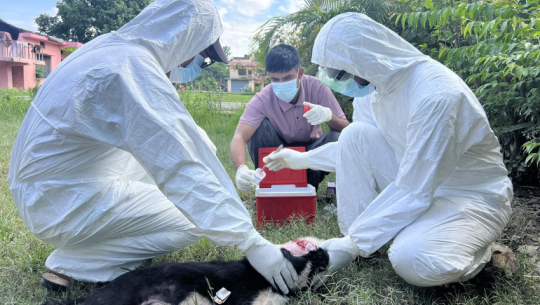
Kanchanpur: The rabies situation in the Far West Province has become increasingly serious in recent times, posing a major public health challenge.
Rabies is spreading among animals and humans through bites from wild jackals and stray dogs. According to Naresh Prasad Joshi, Senior Veterinarian at the Animal and Bird Disease Research Laboratory in Dhangadhi, at least 18 animals have died of rabies in the past 20 days alone. He said that over the past three years, 371 animals have been confirmed to have rabies, based on cases reported to the laboratory.
“This figure only reflects cases that have reached the laboratory,” Joshi said. “At least five human deaths due to rabies have been recorded, but the actual number may be higher as many cases go unreported.”
Joshi said a 70-year-old woman from Surma Rural Municipality–2 in Bajhang died of rabies this week. Earlier this year, a child in Baitadi also died from rabies during the month of Ashar. The highest number of rabies cases have been reported from Kailali and Kanchanpur districts. Of the 170 samples collected in the fiscal year 2081/82, rabies was confirmed in 136.
Kailali recorded the highest number of infections during that fiscal year, with 78 out of 98 samples testing positive. This was followed by Kanchanpur, where 43 out of 53 samples were confirmed positive. Similarly, five out of seven samples in Achham, three in Bajhang, and six out of eight in Doti tested positive. Rabies was also confirmed in an animal that had been biting other animals in Godavari Municipality–6 of Kailali just two days ago. Joshi said the laboratory’s Rapid Response Team confirmed rabies after testing collected samples.
Earlier, rabies was detected in several dogs in Shuklaphanta Municipality–1 of Kanchanpur. Now, fear among residents has grown in Ward No. 12 of the same municipality, according to Ram Prasad Bhatta, head of the municipality’s Livestock Development Branch. He said that foxes have recently begun entering human settlements more frequently, mainly due to the destruction of their natural habitat during sugarcane harvesting.
“Once sugarcane harvesting begins, foxes lose their hiding and feeding grounds,” Bhatta said. “As a result, they enter settlements in search of food, bite domestic animals and dogs, and the rabies infection spreads rapidly.”
Veterinarian Bhojraj Pandey said that although rabies is a 100 percent fatal disease, lives can be saved if timely treatment and preventive measures are taken. He advised that if bitten by any animal, the wound should be washed thoroughly with soap and clean water for 10 to 15 minutes, and medical attention should be sought immediately, even if the wound appears minor, to receive anti-rabies vaccination.
He also stressed that if animals display abnormal behavior such as excessive salivation or aggressive biting, the incident should be immediately reported to local authorities or animal service branches. Pandey urged people to vaccinate domestic animals, avoid contact with wild animals and stray dogs, and ensure children take special precautions.

Dineshkhabar Desk