
World Thyroid Day: Endocrinologists warn women face higher thyroid disease risk than men
Chitwan: Endocrinologists (hormone specialists) have said that women are at higher risk of thyroid disease than men due to hormonal factors. Saurav Khatiwada, an endocrinologist at Chitwan Medical College (CMC) Teaching Hospital, said that 15 to 20 percent of women are likely to develop hyperthyroidism. He added that the rate in men is about half of that, with only around five to eight percent affected by hyperthyroidism (high thyroid).
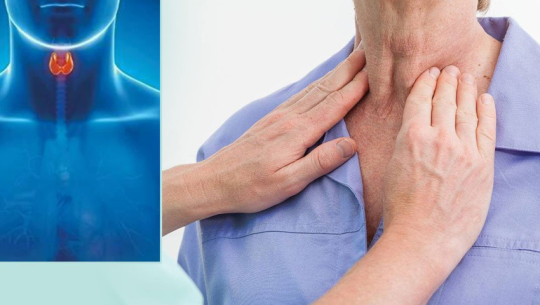
He explained that the thyroid is a small gland located at the front of the neck and is divided into two parts. According to him, it produces essential hormones required by the body, which play a vital role in daily life, including growth and brain development in children, as well as energy, vitality, heart function, digestion, and body fat balance.
He noted that thyroid disorders can present different symptoms depending on whether thyroid hormone is deficient or in excess. He also said that sometimes the thyroid gland itself can cause pain, and tumors may develop in it. He described thyroid tumors as among the most easily treatable types.
According to Dr. Khatiwada, when thyroid levels increase, symptoms such as panic, hand tremors, rapid heartbeat, and heat intolerance can occur. He stated that this condition is known as “slimming thyroid,” where T3 and T4 hormones increase while TSH decreases. He said patients are treated with medication to reduce thyroid hormone levels.
He clarified that a sore throat is not caused by the thyroid itself, but noted that in some cases it may develop into thyroid cancer. He advised that if a lump is felt in the neck, an ultrasound should be done to check for cancer, and in some cases a tumor test is also required. He added that if cancer is detected, it can be treated through surgery and radiotherapy.
Physician Bhojraj Adhikari at Pushpanjali Hospital said that thyroid problems are commonly seen in women. He explained that thyroid disorders generally involve either an increase or decrease in hormone levels. When thyroid hormone decreases, TSH levels increase, which is known as hypothyroidism. In such cases, T3 and T4 levels fall below normal, and it is also referred to as sluggish or obese thyroid. He said this condition can cause fatigue, swelling in the legs, pale complexion, and hair loss. He added that taking one pill every morning with water can help control the condition.
He further stated that women are more likely to develop thyroid problems between the ages of 25 and 50, starting from childbirth, and that most people experience reduced thyroid function before menopause.
Endocrinologist Umnath Adhikari said that the higher prevalence of thyroid problems in women is due to autoimmunity. He explained that women have higher rates of autoimmune conditions than men, which leads to more thyroid-related issues.
He added that autoimmune conditions are more common in women and less frequent in men. He said menstrual irregularities can occur when thyroid levels increase, and due to autoimmunity, thyroid hormone levels may rise. He also noted that thyroid disorders can cause symptoms such as body pain, weight loss, and weight gain in women.

Dineshkhabar Desk