
Milk production and availability rise significantly in far west province
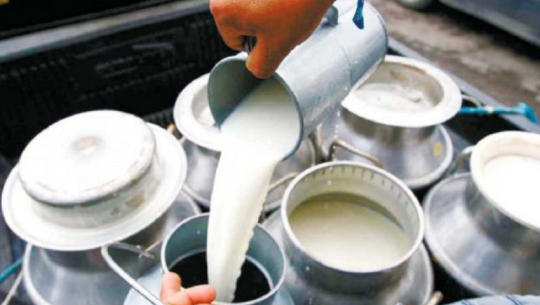
Dhangadhi: Milk availability in the Far West Province has increased to 120–130 liters per capita per year, driven by the commercialization of milk production. About 15 years ago, per capita milk availability in the region was significantly lower.
Shankar Sah, Secretary of the Ministry of Land Management, Agriculture and Cooperatives, stated, “Earlier, milk was produced primarily for household consumption, but recent commercial production has increased overall availability.” According to him, approximately 60,000 to 70,000 farmers are engaged in milk production across the province, with 10,000 to 12,000 receiving direct employment from the sector.
The ministry reports that around one million cows and 500,000 buffaloes are reared across all nine districts of the province, producing an estimated 355,000 metric tons of milk annually. Secretary Sah added that although the recommended per capita milk availability in Nepal is 92 liters, the national average is 90 liters, while the Far West Province is ahead in consumption due to domestic use, with many families producing ghee, curd, mohi, and other dairy products at home.
Agricultural experts suggest that branding locally produced milk and dairy products could create a distinctive identity for Sudurpaschim’s dairy sector. Secretary Sah emphasized that promoting products such as ghee, curd, chhurpi, and paneer by linking them to local taste and culture could contribute to the province’s economic transformation.
Despite challenges posed by hilly terrain, limited infrastructure, and market access, Karna Bahadur Hamal, Central Vice President of the Nepal Dairy Association, described the production volume as a significant achievement. He noted that 33 dairy industries operate across the province, with some milk reaching markets as far as Chitwan and Bhaktapur.
Hamal highlighted ongoing challenges, including the lack of milk processing facilities, powder plants, cold chain technology, transportation difficulties, and price ambiguities, which continue to affect smooth industry management despite the increase in milk production.